
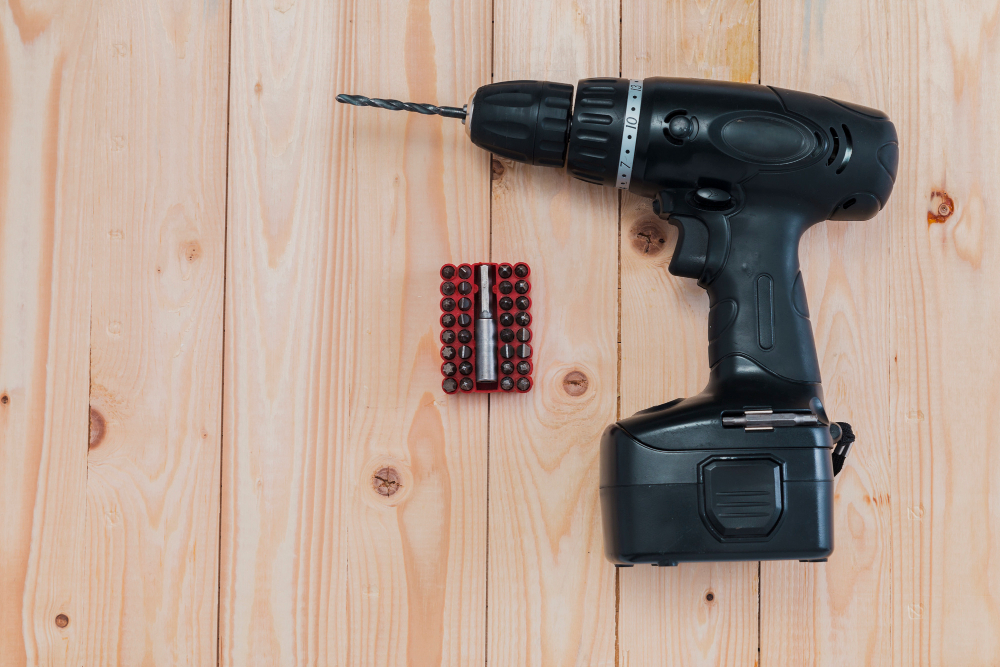
Knowing how to store lithium-ion drill batteries correctly can add years to their working life and prevent capacity loss, swelling, or safety problems. Lithium-ion cells degrade fastest at full charge and in heat, so a few simple habits make a real difference. Whether you are putting tools away for the winter or just resting between projects, the steps below keep your packs healthy and ready.
Table of Contents:
Key Takeaways
- Store lithium-ion drill batteries at roughly 40 to 60 percent charge, not fully charged or empty.
- Keep them cool and dry, ideally between 10 and 20 degrees Celsius (50 to 68 degrees Fahrenheit), away from direct heat.
- Remove batteries from the tool and the charger during long-term storage.
- Recharge stored packs to mid-level every few months to prevent deep discharge.
- Avoid freezing temperatures, moisture, and contact with metal objects or flammable materials.
Knowing how to store lithium-ion drill batteries correctly can add years to their working life and prevent capacity loss, swelling, or safety problems. Lithium-ion cells degrade fastest at full charge and in heat, so a few simple habits make a real difference. Whether you are putting tools away for the winter or just resting between projects, the steps below keep your packs healthy and ready.
The Ideal Charge Level for Storage
A lithium-ion battery should never sit fully charged or empty for long, because both extremes stress the cells and accelerate aging. Storing drill batteries at around 40 to 60 percent charge puts the least strain on the chemistry and slows capacity loss. Most quality packs hold this level well for months at a time. If your charger or tool has a fuel gauge, aim for roughly two of four lights, or check the level before you store the pack.
The Best Temperature and Environment
Heat is the biggest enemy of lithium-ion cells, so where you store them matters as much as how you charge them. Keep drill batteries in a cool, dry place at roughly 10-20 degrees Celsius, away from radiators, sunlight, and parked vehicles. Avoid garages and sheds that freeze in winter or bake in summer, since both extremes shorten lifespan. An indoor drawer or shelf works well, and the way a pack tolerates temperature depends on its lithium-ion battery chemistry and built-in protection.
How to Store Drill Batteries Long Term
For long-term storage of several months or more, take a few extra steps. Remove each battery from the tool and from the charger, since leaving a pack in either slowly drains it. Set the charge to mid-level, then store the packs separately so the terminals do not touch metal or each other. Keep them in their original cases or a non-conductive container. The same rules apply to cordless garden equipment, so if you have just compared a battery vs petrol hedge trimmer, store its battery the same way.
Maintenance Checks During Storage
Lithium-ion batteries self-discharge slowly even when idle, and a deeply discharged pack can become unusable or unsafe. Top off stored batteries to around 50 percent every two to three months to keep them out of the low-voltage danger zone. Inspect each one for swelling, corrosion, or damage before recharging, and retire any pack that looks deformed. Well-engineered battery systems include management electronics that guard against over-discharge, but regular manual checks are still worthwhile.
EMBS designs custom lithium-ion battery systems with cell selection and safety electronics that make power-tool packs durable and dependable. If you build cordless tools and need a partner for battery design, testing, and manufacturing, contact our team to start the conversation.
Frequently Asked Questions
How Should I Store Drill Batteries Long Term?
Can I Leave Lithium-Ion Drill Batteries on the Charger?
Is It Bad to Store Lithium-Ion Batteries Fully Charged?
About the Author
EMBS
Leading manufacturer of advanced battery systems with a market presence of over 25 years. We specialise in rechargeable lithium-ion batteries, producing a wide range of systems with varying power and capacity.