
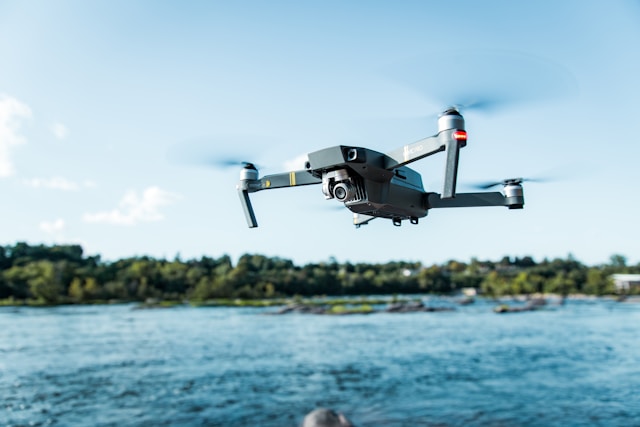
You map out the perfect flight path, launch your drone, and the low battery warning flashes before you finish. If you are wondering how long a drone battery lasts in real-world conditions, the answer depends entirely on the model. Knowing exactly what to expect from your power source helps you plan better flights and avoid costly crashes.
Table of Contents:
Key Takeaways
- Most consumer models fly for 20 to 30 minutes on a single charge.
- Toy drones generally max out at 5 to 10 minutes.
- Professional rigs can exceed 40 minutes of flight time.
- Weather, payload weight, and flying style drain power rapidly.
You map out the perfect flight path, launch your drone, and the low battery warning flashes before you finish. If you are wondering how long a drone battery lasts in real-world conditions, the answer depends entirely on the model. Knowing exactly what to expect from your power source helps you plan better flights and avoid costly crashes.
Breaking Down How Long a Battery Lasts in a Drone
Entry-level and toy models carry small, lightweight batteries. These units typically keep the drone in the air for 5 to 10 minutes. You will spend more time charging than flying with these basic models.
Mid-range consumer models offer a much better balance. Most popular consumer drones hover around the 20 to 30-minute mark. This gives you enough time to frame a shot, inspect a small residential property, or capture landscape footage.
Professional setups push the boundaries further. High-end drones built for mapping or cinema use massive battery packs that far exceed those carried by consumer models. These specialized rigs can reach 40 to 45 minutes of sustained flight. Adding heavy camera gear or LiDAR scanners will quickly drain that reserve.
How Long Do DJI Drone Batteries Last Compared to Budget Options?
DJI dominates the consumer market and sets the standard for flight times. A standard DJI battery will reliably deliver between 25 and 35 minutes of flight. Models like the Mavic 3 series can reach up to 40 minutes of flight time under ideal conditions. The smaller Mini series still manages an impressive 30 minutes despite its compact size.
Many beginners ask how long a Sky Viper drone battery lasts when buying their first quadcopter. Sky Viper models generally top out at 5 to 15 minutes per charge. They use lower-quality lithium-polymer packs that prioritize low cost over high capacity. You need spare batteries for a decent flying session with these entry-level quads.
What Drains Your Power the Fastest?
Your estimated flight time is just a baseline. Real-world conditions often significantly reduce the manufacturers’ numbers. Several factors drain your capacity faster than expected:
- Flying in strong gusts of wind overworks the motors.
- Freezing temperatures cause battery voltage to drop rapidly.
- Rapid acceleration and aggressive maneuvers pull maximum current.
- Adding heavy payloads, such as extra cameras, increases the lift requirement.
Cold weather affects lithium chemistry in ways that matter beyond a single flight. Understanding what affects a battery’s life cycle helps you avoid sudden power loss mid-flight. The same storage principles that apply to e-bike batteries also apply here: discharge to around 50 percent for the off-season, keep packs at room temperature, and avoid leaving them fully charged on a shelf for weeks.
Smooth, deliberate flight movements extend your time in the air. Good storage habits protect your investment across seasons.
Extend Your Flight Time
Off-the-shelf power sources do not always meet complex commercial demands. If your operations require extended flight times beyond what consumer packs can deliver, a custom-engineered battery system built to your exact weight and discharge specifications is worth considering.
Contact the EMBS team to discuss your project requirements.
FAQ
Can you put a bigger battery in a drone to increase flight time?
How many charging cycles does a drone battery last?
Why does my drone battery die so fast?
About the Author
EMBS
Leading manufacturer of advanced battery systems with a market presence of over 25 years. We specialise in rechargeable lithium-ion batteries, producing a wide range of systems with varying power and capacity.