
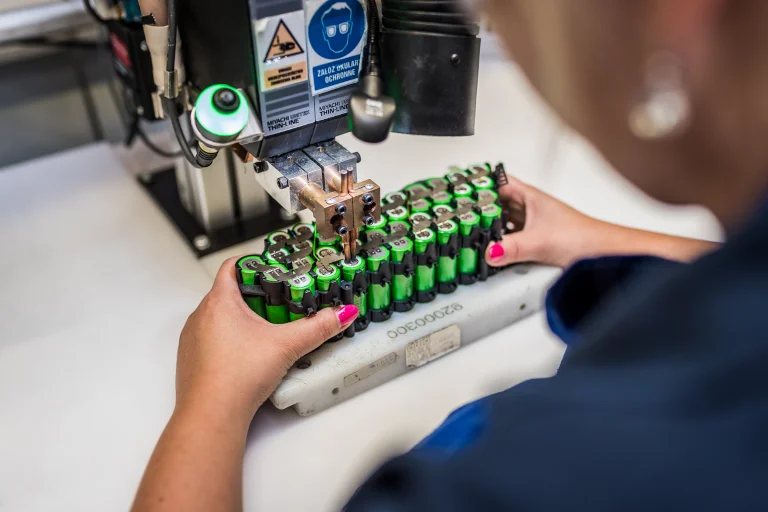
The cycle life of a battery is a significant factor. It is essentially the number of times the battery can be charged then discharged, before it reaches its predefined End of Life capacity. The cycle life can be influenced by several factors, and on this page, we’re going to take a short look at what these factors are.
Table of Contents:
Battery life cycle is one of the key factors influencing the long-term performance, range, and value of an e-bike battery. It refers to the number of charge and discharge cycles a battery can complete before its usable capacity drops below a defined level. The main factors affecting battery performance include temperature, current load, depth of discharge, battery age, and the End of Life threshold.
Key Takeaways
-
Charge Regularly: Aim to charge your e-bike battery after each ride to maintain optimal health.
-
Optimal Charge Range: Keep the battery charge between 20% and 85%.
-
Avoid Overcharging: Use the manufacturer’s charger and unplug once fully charged.
-
Proper Storage: Store the battery at around 50% charge if not in use for extended periods.
-
Temperature Awareness: Charge within the recommended temperature range to ensure safety and longevity.
What Affects Battery Life Cycle?
Temperature
Temperature can have a major effect on the battery life cycle of an e-bike battery can be significantly affected by temperature because it influences the chemical reactions taking place inside the cells. The optimum operating temperature for many batteries is around 25°C. When a battery is exposed to temperatures significantly above or below this point, it may suffer from faster capacity loss and reduced efficiency.
Extreme temperatures, especially cold conditions, can increase the internal resistance of the battery. This makes it harder for the battery to deliver power efficiently and may reduce the e-bike’s range. In hot conditions, the electrolyte can degrade more quickly, which may lead to permanent capacity loss. To protect long-term performance, always store, charge, and use your e-bike battery within the recommended temperature range provided by the manufacturer.
Currents
Current load is another key factor affecting battery life cycle because higher currents usually generate more heat and place more stress on the battery cells. As a result, repeated exposure to high current demand can shorten the overall life of a battery.
High currents are commonly experienced during rapid acceleration, steep climbs, heavy loads, or riding in demanding conditions. These situations increase heat buildup inside the battery, and over time, excessive heat can damage internal components. To reduce this stress, avoid aggressive starts whenever possible and try not to use the battery continuously under heavy load, particularly in very hot or cold weather.
Depth of Discharge and Voltage Window
It is generally not recommended to charge lithium-ion batteries from 0% State of Charge (SoC) to 100% SoC on a regular basis, as this can negatively affect the battery’s long-term performance. Instead, batteries often last longer when they are kept within a more moderate range, such as 20% to 80%. This can be managed manually by the user or automatically through a Battery Management System (BMS).
Operating within a narrower voltage window helps extend the battery life cycle by reducing stress on the cells and can result in more usable charge cycles over time. This is especially important for e-bike batteries, which are often charged and discharged frequently. Consistently charging to 100% or draining the battery to 0% may accelerate capacity loss. Many modern e-bike systems now include built-in charge-limiting features that help keep the battery within an optimal range.
Battery Age
The age of a battery also affects battery life cycle because older batteries can experience gradual chemical degradation. Older batteries can have a shorter cycle life due to self-discharge, parasitic reactions, and natural wear inside the cells. This means that batteries stored for a long time before being used may already have reduced performance, even if they have not completed many charge cycles.
As batteries age, their internal components gradually degrade. This can lead to reduced charge retention, longer charging times, lower peak performance, and less efficient power delivery. Proper storage and regular maintenance can slow this process. When the battery is not in use for an extended period, it should usually be stored at a partial charge and checked periodically.
End of Life Threshold
The End of Life threshold is set by the manufacturer and is usually defined as somewhere around 60% to 80% of the battery’s initial capacity. Understanding the EoL threshold is important when comparing battery life cycle claims between different manufacturers and models because each producer may define battery end of life slightly differently.
The End of Life (EoL) threshold represents the point at which a battery is considered no longer efficient enough for its intended purpose. However, this does not always mean the battery must be replaced immediately. It may still function, but with limited performance, reduced range, and faster capacity decline. Batteries can also fail earlier than expected if they are misused, mechanically damaged, charged incorrectly, or stored outside recommended conditions.
Once an e-bike battery reaches its EoL, it will gradually lose its ability to hold a charge, and the riding range will decrease. At this stage, it is important to monitor battery performance and plan for replacement to maintain safe and reliable e-bike operation.
Conclusion
Protecting the battery life cycle starts with good everyday habits and care. Safe temperatures, moderate current loads, partial charging, and proper storage can help extend the useful life of an e-bike battery.
Check also what are the best batteries for power tools.
FAQ
When should I charge my e-bike battery?
Is it safe to overcharge an e-bike battery?
How should I store my e-bike battery when not in use?
Can I use any charger for my e-bike battery?
What temperature is best for charging my e-bike battery?
Sources
Sullivan, J. L., & Gaines, L. (2010). A review of battery life-cycle analysis: state of knowledge and critical needs. https://publications.anl.gov/anlpubs/2010/11/68455.pdf
Sullivan, J. L., & Gaines, L. (2012). Status of life cycle inventories for batteries. Energy conversion and Management, 58, 134-148.
Porzio, J., & Scown, C. D. (2021). Life‐cycle assessment considerations for batteries and battery materials. Advanced Energy Materials, 11(33), 2100771. https://advanced.onlinelibrary.wiley.com/doi/pdfdirect/10.1002/aenm.202100771
Gaines, L., Sullivan, J., Burnham, A., & Belharouak, I. (2011, January). Life-cycle analysis for lithium-ion battery production and recycling. In Transportation Research Board 90th Annual Meeting, Washington, DC (pp. 23-27).
About the Author
EMBS
Leading manufacturer of advanced battery systems with a market presence of over 25 years. We specialise in rechargeable lithium-ion batteries, producing a wide range of systems with varying power and capacity.