
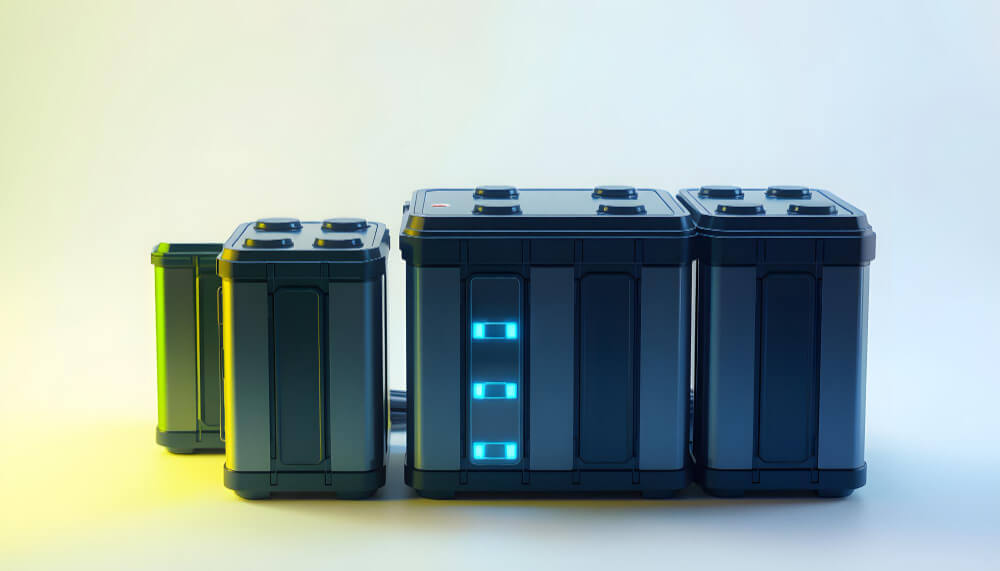
When selecting a battery system for an industrial application, engineers and fleet managers often face a critical choice between two distinct architectures: high-power and high-energy.
Table of Contents:
Key Points
- Engineers and fleet managers must choose between high-power and high-energy battery systems based on their application needs.
- High-power batteries provide quick energy bursts for heavy lifting, while high-energy batteries offer longer runtimes at a steady pace.
- Selecting the appropriate battery architecture is crucial to avoid system failure and ensure optimal performance.
When selecting a battery system for an industrial application, engineers and fleet managers often face a critical choice between two distinct architectures: high-power and high-energy. While they might look identical on the outside, the internal engineering determines whether they are built for speed or endurance. Understanding the difference between a high-power vs high-energy battery is the first step in ensuring your device performs reliably and cost-effectively.
The Sprinter vs. The Marathon Runner
The most effective way to visualize this difference is to imagine two types of athletes. A high-power battery is like a sprinter. It is designed to release a massive amount of energy very quickly. It may not last long, but it provides the explosive strength needed for heavy lifting or rapid acceleration.
In contrast, a comparison of an energy battery and a power battery highlights that the high-energy version is a marathon runner. It is engineered to store as much fuel as possible. It releases this energy at a steady, moderate pace over a long period. It cannot handle the sprinter’s explosive bursts, but it will keep running long after the sprinter has exhausted their supply.
Defining High Energy: Maximum Runtime
High-energy batteries are designed with one goal in mind: capacity. Engineers achieve this by packing as much active material (lithium ions) as possible into the cell casing. This results in a high energy density, measured in Watt-hours per kilogram (Wh/kg), which directly translates to longer runtime or range.
These batteries are ideal for applications where the device needs to operate for an entire shift without recharging. A prime example from our portfolio is the Universal 24 V, 49 Ah battery system. With a massive 49Ah capacity, this unit is built for Automated Guided Vehicles (AGVs) or industrial robotics that require steady power for 8 to 12 hours. The focus here is not on speed, but on keeping the machine moving all day. The internal architecture uses thicker electrodes to store more ions, but this creates a longer path for them to travel, limiting how fast they can exit.
Defining High Power: Maximum Force
High-power batteries sacrifice some capacity to gain speed. Inside the cell, the electrodes are thinner and more porous. This allows lithium ions to move incredibly fast, delivering high current without overheating. The C-rate measures this capability. A high-energy battery might have a C-rate of 1C (discharging in one hour), while a high-power battery can handle 10C, 20C, or even higher.
The best example of this is the 18 V, 4 Ah Power Tool battery system. While it only stores 4Ah of energy, it can deliver a continuous discharge current of 50 Amps. This is more than 12 times its capacity rating. Power vs energy battery designs are most critical here because a standard energy cell would simply overheat and fail if you tried to pull 50 Amps from it to drive a circular saw or a heavy drill.
Which One Do You Need?
Choosing the wrong architecture is a common cause of premature system failure. If you use a high-energy battery in a high-power application, the internal resistance will cause voltage sag and heat buildup. Conversely, using a high-power battery for a low-load application like a sensor is a waste of money, as you are paying for performance you do not need while getting less runtime.
When designing a battery system, start by defining your load profile. Does your application require short bursts of high torque? You need a power battery. Does it require long hours of continuous, low-intensity operation? You need an energy battery. By matching the chemistry of Li-ion cells to your specific load profile, EMBS ensures that your product achieves the perfect balance of performance and longevity.
Still unsure? Contact us, and we will help you decide!
What is the main difference between high-power and high-energy batteries?
What type of applications are high-energy batteries best suited for?
How do high-power batteries achieve their performance?
What should you consider when choosing a battery system for your application?
About the Author
EMBS
Leading manufacturer of advanced battery systems with a market presence of over 25 years. We specialise in rechargeable lithium-ion batteries, producing a wide range of systems with varying power and capacity.