
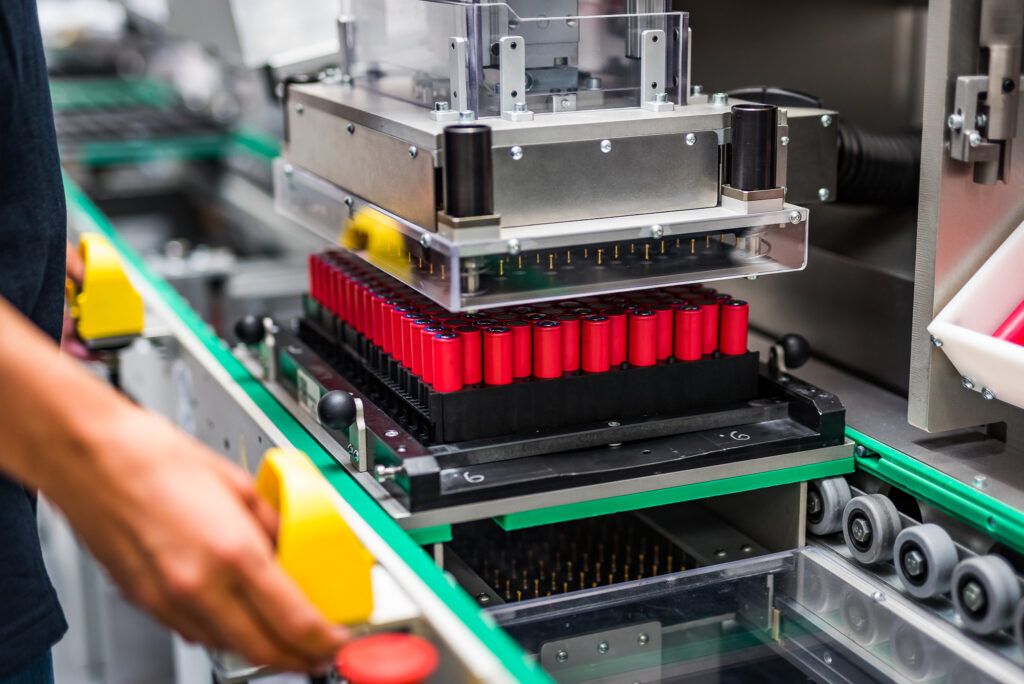
The humble battery system: it’s used in all walks of life, but rarely do we give it a second thought. On this page, we’re going to be taking a closer look at battery systems, telling you exactly what they are and what their components are. And we know what we’re talking about, as we’ve been a leading name in the battery industry for decades!
Table of Contents:
A battery system is much more than a group of connected cells. It is a complete energy storage solution that combines battery cells, a Battery Management System, connectors, housing, and safety features to store, control, and deliver power efficiently. A well-designed battery system improves performance, protects components, extends service life, and ensures reliable operation in demanding applications.
Key Takeaways:
- Integrated Components: A battery system comprises cells, a BMS, connectors, and housing, all working together to ensure efficient energy storage and discharge.
- Safety and Performance: The BMS plays a vital role in monitoring and managing the battery’s health, ensuring safe and optimal performance.
- Wide Applications: Battery systems are essential in various fields, from personal electronics to industrial machinery and renewable energy solutions.
What Is a Battery System?
A battery system is a complete energy storage solution made up of multiple components that work together to store, control, protect, and deliver electrical energy. Unlike a single battery cell, a battery system is an integrated structure that combines cells, electronics, connectors, housing, and safety mechanisms.
In simple terms, a battery system creates a controlled and efficient place for energy to be stored and discharged. However, in modern applications, its role goes far beyond energy storage. A properly engineered battery system is responsible for managing performance, safety, charging, discharging, monitoring, and long-term reliability.
Battery systems are used in many industries, including electric vehicles, e-bikes, power tools, industrial equipment, medical devices, robotics, renewable energy storage, and consumer electronics. Each application has different requirements, which means that the battery system must be designed according to its expected power demand, operating conditions, safety standards, and lifecycle targets.
You will find several key components in a battery system, each of which plays an important role in overall performance and safety.
What Are Battery Cells?
Battery cells are the foundation of every battery system because they store electrical energy in chemical form. The most common cell chemistries include lithium-ion and lead-acid, although other technologies are also available depending on the application.
A battery system may contain a single cell, but in most cases it includes multiple cells connected together in series, parallel, or a combination of both. Cells connected in series increase voltage, while cells connected in parallel increase capacity and runtime.
The chemistry, capacity, quality, and configuration of the cells directly affect energy density, voltage, discharge behaviour, safety, weight, and battery lifespan. One of the most important decisions when designing a battery system is selecting the right cell type. For example, lithium-ion cells are often used in portable electronics and e-mobility applications because they offer high energy density, good performance, and relatively low weight.
In contrast, applications focused on lower cost, specific durability needs, or less demanding performance requirements may still use alternative chemistries. Choosing the right cells is therefore a strategic decision that must balance performance, safety, cost, availability, lifecycle, and environmental conditions.
What Is a Battery Management System?
A Battery Management System (BMS) is one of the most important parts of a modern battery system. It monitors and controls the charging and discharging process to help ensure safety, performance, and long battery life.
The BMS acts as the control centre of the battery system. It continuously analyses data such as voltage, current, temperature, state of charge, state of health, and cell balance. Based on this information, it can make real-time decisions to protect the battery from overcharging, over-discharging, overheating, excessive current, and other potentially harmful conditions.
In many systems, the BMS can also communicate with the device powered by the battery. This allows the machine, vehicle, or device to operate more efficiently and respond to battery status information. In high-energy or mission-critical applications, a properly selected BMS significantly reduces the risk of failure, reduced lifespan, and safety incidents.
Not every battery has a built-in BMS. For example, some small batteries used in simple electronic devices may not require one. However, in most professional, industrial, and high-performance applications, a BMS is strongly recommended. The best choice depends on the battery chemistry, voltage, power level, communication needs, and safety requirements.
What Are Cell Connectors?
Cell connectors are used to electrically connect battery cells so they can work together as one system. They are essential for creating the required voltage and capacity of the battery pack.
The quality and design of cell connectors have a direct impact on electrical resistance, thermal behaviour, current flow, and overall system reliability. Poorly designed or incorrectly installed connectors can cause energy losses, uneven cell loading, local overheating, and reduced battery efficiency.
Battery cells can be connected using different technologies, such as welded nickel strips, copper busbars, aluminium connectors, flexible interconnects, or other customised connection methods. The correct connection method depends on current levels, vibration exposure, available space, thermal requirements, serviceability, and the type of cells used.
Choosing the right cell connector is especially important in battery systems exposed to high currents, frequent charge and discharge cycles, vibration, shocks, or demanding industrial conditions.
What Are Cell Holders and Battery Housing?
Cell holders and housing keep the battery cells in the correct position and protect the system from mechanical damage. They help maintain structural stability, improve durability, and support safe operation during use.
Housing can take many forms and is often customised to match the target application. In addition to mechanical protection, it can also support thermal management, electrical insulation, and resistance to environmental factors such as dust, moisture, chemicals, vibration, and impact.
Well-designed housing improves battery safety, simplifies installation, supports maintenance, and allows the battery system to be integrated smoothly into a device, machine, or vehicle. It also helps prevent cell movement, which could otherwise damage connectors, insulation, or electronic components over time.
What Are the Functions and Applications of Battery Systems?
Battery systems are an integral part of modern technology and will continue to develop as companies invest in research and development. The main goals of battery system innovation include higher efficiency, greater capacity, improved safety, longer lifespan, faster charging, and reduced environmental impact.
Battery systems are used in consumer electronics, e-bikes, electric vehicles, industrial cleaning machines, power tools, robotics, medical devices, backup power systems, and renewable energy storage. They enable mobility, flexibility, energy independence, and electrification across many sectors.
As energy demand grows and sustainability becomes a priority, advanced battery systems will play a central role in future infrastructure and technology. A well-designed battery system improves performance, protects the user, extends service life, and helps reduce total operating costs.
At EMBS, we understand that every application has unique technical and safety requirements. That is why battery systems should be designed with the right cells, BMS, connectors, housing, and testing process from the very beginning.
FAQ
What is a battery system?
What components make up a battery system?
Why is a Battery Management System (BMS) important?
What are the applications of battery systems?
Sources
Rahn, C. D., & Wang, C. Y. (2013). Battery systems engineering. John Wiley & Sons.
Atcitty, S., Neely, J., Ingersoll, D., Akhil, A., & Waldrip, K. (2013). Battery energy storage system. In Power Electronics for Renewable and Distributed Energy Systems: A Sourcebook of Topologies, Control and Integration (pp. 333-366). London: Springer London.
Horiba, T. (2014). Lithium-ion battery systems. Proceedings of the IEEE, 102(6), 939-950. http://ael.chungbuk.ac.kr/lectures/lecture_notes/battery-and-energy-storage/Lithium-Ion_Battery_Systems.pdf
Plett, G. L. (2015). Battery management systems, Volume I: Battery modeling. Artech House.
About the Author
EMBS
Leading manufacturer of advanced battery systems with a market presence of over 25 years. We specialise in rechargeable lithium-ion batteries, producing a wide range of systems with varying power and capacity.