
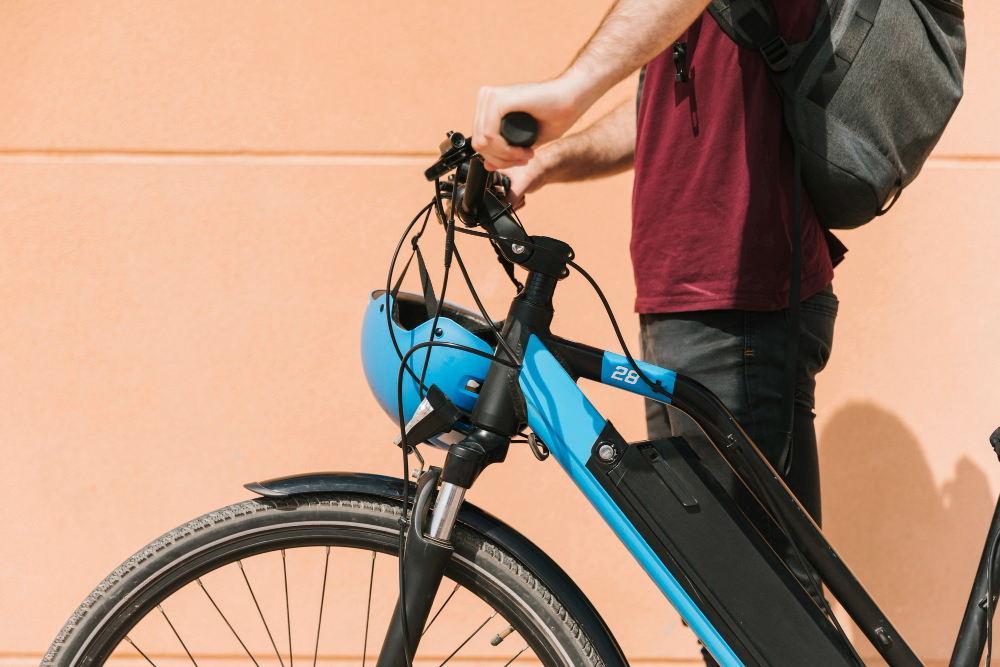
Ask this question in an engineering room, and you won’t get a single answer; you’ll get a whiteboard full of trade-offs. Energy density versus safety. Voltage versus thermal load. Cycle life versus cost. That’s the reality of e-bike battery design. The best battery isn’t defined by chemistry alone; it’s defined by how well the entire […]
Table of Contents:
Ask this question in an engineering room, and you won’t get a single answer; you’ll get a whiteboard full of trade-offs. Energy density versus safety. Voltage versus thermal load. Cycle life versus cost. That’s the reality of e-bike battery design. The best battery isn’t defined by chemistry alone; it’s defined by how well the entire system is engineered for its job.
So when people ask which battery is best for an e-bike, the real answer starts with one word: application.
Key Points:
- The best e-bike battery depends on the specific application, not just its chemistry.
- A well-designed system—including cells, BMS, and enclosure—ensures performance, safety, and longevity.
- Manufacturing quality and process control are critical to achieving consistent, reliable battery performance.
Start with the system
You should keep in mind that an e-bike battery actually works under vibration, temperature swings, peak current draws, and real-world abuse that lab specs never show. That’s why serious manufacturers design batteries as systems: cells, BMS, enclosure, and production process all working together.
From compact urban commuters to high-torque cargo bikes, the electrical requirements can range from just a few watt-hours to multi-kilowatt-hour packs. Voltage levels matter too: 36V remains common, while 48V dominates modern designs, and higher-voltage systems push efficiency even further when paired with the right electronics.
The “best” battery for an e-bike is the one engineered specifically for those parameters, not retrofitted after the fact.
Lithium-ion is the baseline
Lithium batteries for e-bikes are non-negotiable in today’s market. The real question is which lithium-ion formulation is better for your needs.
- NMC (Nickel Manganese Cobalt) is often the go-to for performance-driven designs. High energy density keeps packs compact and lightweight, while strong discharge characteristics support acceleration and climbing.
- LFP (Lithium Iron Phosphate) stands out where safety, thermal stability, and long cycle life matter more than weight. It’s heavier, yes, but exceptionally robust for high-duty or fleet applications.
In a nutshell, the right choice depends on how the bike is used, charged, stored, and maintained over the years.
Voltage, capacity, and the reality of load
Keep in mind that capacity numbers alone don’t tell the full story. Watt-hours (Wh) matter, but so does how the battery behaves under load. Voltage sag, heat buildup, and cell imbalance separate a well-engineered pack from one that merely looks good on paper.
Higher-voltage systems reduce current for the same power output, improving efficiency and lowering thermal stress, but only if the battery, BMS, and production process are designed for it. A poorly integrated high-voltage pack creates more problems than it solves.
The BMS is the brain of your e-bike
The battery management system (BMS) isn’t just a safety checkbox. It impacts performance, longevity, and reliability. A properly designed BMS balances cells, controls current limits, monitors temperature, and protects the pack throughout its lifecycle. For manufacturers and OEMs, this intelligence is what turns a battery into a product instead of a risk.
Manufacturing quality is where “best” is proven
Even the right chemistry and design can fail if the production process isn’t disciplined. High-quality e-bike batteries come from manufacturing environments built around first-time quality, lean production, and rigorous process control. Techniques like PFMEA analysis, one-piece flow, and carefully chosen automation levels aren’t buzzwords – they’re how consistency is achieved at scale.
Whether produced on manual lines for flexibility or semi-automated lines for volume efficiency, it’s crucial to focus on repeatability. Battery performance doesn’t just come from design; it comes from how reliably that design is executed thousands of times.
So, which battery is the best?
The best e-bike battery is one that’s well engineered and one that matches chemistry to use case, voltage to system design, and manufacturing quality to long-term reliability. At EMBS, we understand this perfectly. That’s why we design and manufacture lithium-ion batteries across a wide power range – from ultra-compact packs to multi-kilowatt-hour systems – and understand this balance deeply. Two decades of experience, flexible production capabilities, and engineering-led decision making matter far more than chasing the latest spec-sheet trend.
Because in the real world of e-bikes, performance is expected, but consistency, safety, and scalability are what define the best.
Want to learn more about our work philosophy and mission? Check out our website.
FAQ
What type of lithium-ion battery is best for my e-bike, NMC or LFP?
How does voltage affect e-bike battery performance and efficiency?
Why is the Battery Management System (BMS) important?
How do real-world conditions like vibration and temperature impact battery life?
What role does manufacturing quality play in battery reliability?
About the Author
EMBS
Leading manufacturer of advanced battery systems with a market presence of over 25 years. We specialise in rechargeable lithium-ion batteries, producing a wide range of systems with varying power and capacity.