
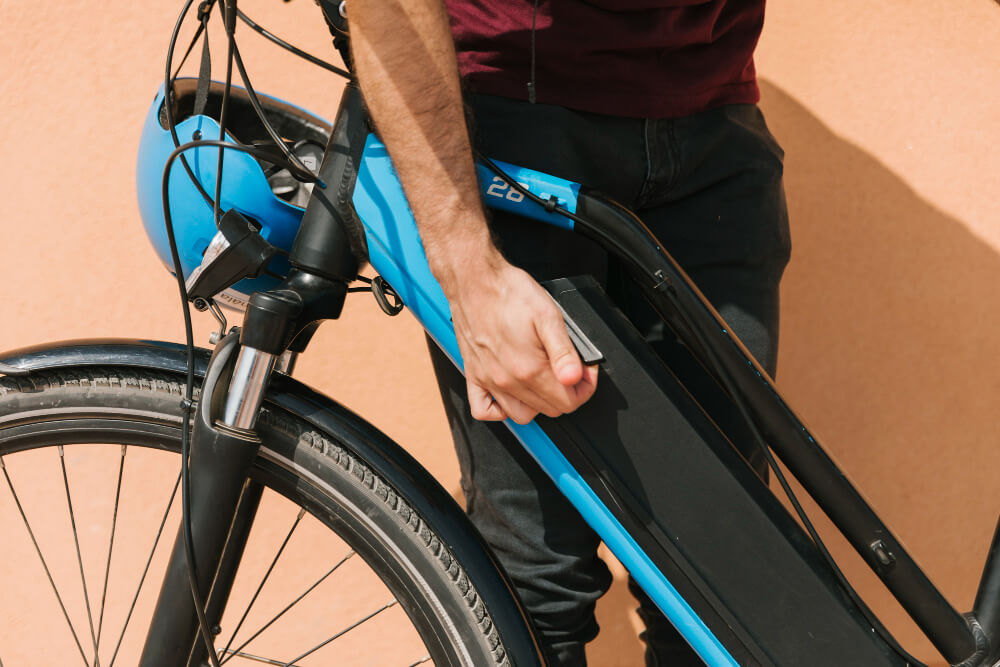
Running two batteries on an e-bike is possible, but it requires professional-grade balancing infrastructure to mitigate fire risk and ensure operational reliability.
Table of Contents:
Key Points
- Running two batteries on an e-bike is feasible but requires professional-grade balancing infrastructure to ensure safety and reliability.
- Parallel configurations are safer and more efficient than series configurations, which can risk overvoltage damage.
- Dual-battery systems provide operational redundancy and extended range, making them essential for logistics and delivery operations.
For fleet operators managing delivery and logistics operations, the answer is both “yes” and “no,” depending entirely on system architecture. Running two batteries on an e-bike is possible, but it requires professional-grade balancing infrastructure to mitigate fire risk and ensure operational reliability. Hobbyist approaches to dual-battery systems have led to field failures; fleet applications require engineered solutions.
Parallel vs. Series: Why Architecture Matters
The fundamental distinction separates parallel and series configurations. In a parallel architecture, both batteries connect to the same voltage bus via diode isolation, allowing current to split according to their internal resistances. Parallel configurations are inherently safer, extend range (doubling capacity at constant voltage), and reduce voltage sag under high current draw. Series connections, by contrast, stack voltages and are dangerous for standard e-bike controllers designed for single-pack inputs. Series configurations risk overvoltage damage to motor controllers and voltage regulators. Many manufacturers and regulators explicitly prohibit series arrangements; parallel-only specifications appear in compliance testing for e-bike batteries. This reality shapes how we approach the design of dual-battery cargo ebike systems.
The Cross-Charging Problem and Fire Risk
The hidden danger in dual-battery systems lies in cross-charging phenomena. When two batteries of different states of charge are connected in parallel, the higher-voltage battery attempts to discharge current into the lower-voltage battery. This uncontrolled current transfer generates heat, accelerates cell degradation, and, in extreme cases, can cause thermal runaway and fire. This is why consumer-grade dual-battery e-bikes fail; they lack the active management infrastructure professional fleets require.
Intelligent Battery Balancers: The Safety Solution
A “Smart Battery Balancer” or “Dual Battery Discharge Balancer” actively monitors both pack voltages and throttles discharge current to maintain equilibrium. This device prevents cross-charging by ensuring both batteries discharge at matched rates, protecting cell health and enabling safe hot-swapping during all-day delivery operations. The balancer communicates with both BMS units, enabling fleet management systems to log individual pack health metrics and predict failures before they impact deliveries.
Physics of Load Distribution and Cycle Life Extension
Physics of load distribution supports the economic case for dual-battery systems. Peukert’s Law describes how battery capacity decreases as discharge current increases; higher current accelerates internal heating and reduces usable amp-hours. By splitting the current load across two parallel batteries, each pack discharges at a lower current, reducing internal heating and extending total cycle life by 15% to 25% compared to single-pack operation. For fleet vehicles operating 6,000+ annual kilometers, this translates into measurable cost savings and reduced battery replacement frequency.
Fleet Redundancy and Hot-Swapping Capabilities
Fleet operators gain operational redundancy from dual-battery architectures. If one battery fails mid-delivery, the second battery continues operating, allowing the vehicle to reach the destination or a service point. Uptime matters in logistics; a single battery failure can cause cascading delays. Multi-battery configurations provide mechanical and thermal redundancy that single packs cannot offer. Additionally, hot-swapping enables rapid battery exchanges, allowing drivers to charge depleted packs overnight while deploying fully charged packs the next morning, supporting continuous fleet availability.
Extended Range Through Dual-Battery Systems
When considering whether you can fit a larger battery in your electric bike, keep in mind that the question applies differently in fleet applications. Commercial operators need to evaluate whether extended capacity through dual-battery systems or single-pack upgrades suffices. Professional guidance matters here. Understanding how to keep e-bike battery range means adopting systems that prevent cross-charging and distribute stress evenly across packs. Professional products undergo compliance testing for e-bike batteries that includes dual-battery operational scenarios; standard consumer tests often omit this critical validation.
The Operational Necessity for Logistics
For logistics and delivery operations, dual-battery e-bikes are not optional upgrades but operational necessities. European manufacturers like EMBS engineer these systems with redundancy, traceability, and a Made in Europe supply chain security that ensures all-day fleet uptime and long-term cost predictability. Sounds interesting? Contact us and let’s talk.
About the Author
EMBS
Leading manufacturer of advanced battery systems with a market presence of over 25 years. We specialise in rechargeable lithium-ion batteries, producing a wide range of systems with varying power and capacity.